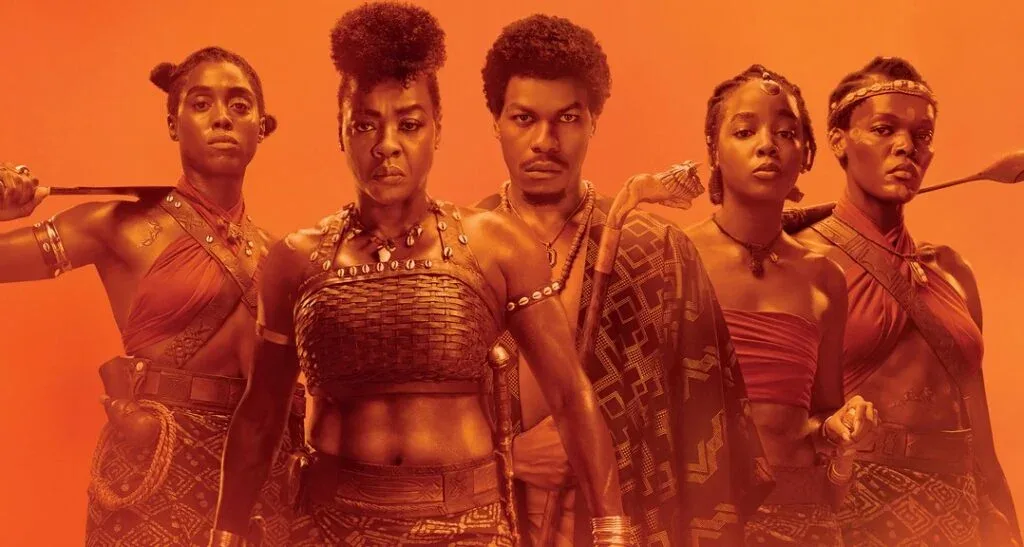
They were called the Agodjiés. Women of arms, women of discipline, women of courage. They swore allegiance to the king,…
They were called the Agodjiés.
Women of arms, women of discipline, women of courage. They swore allegiance to the king, faced combat with rare bravery, and embodied, at the heart of the kingdom of Danxomè, a military force without equal. For a long time, their history remained confined to transmitted accounts, the works of historians, and the living memory of Benin. Then Hollywood seized upon it. And suddenly, the whole world began to turn its eyes toward them.
From the studios of Los Angeles to screens around the world, the warriors of Danxomè now inspire the contemporary imagination and remind us, with brilliance, that African history abounds with figures of power, sovereignty, and grandeur. Two major works have particularly contributed to this global rediscovery.
The Dora Milaje, or the imprint of Danxomè in the Marvel universe
In 2018, Black Panther burst forth as a worldwide phenomenon. More than an immense box-office success, the film marked a decisive cultural turning point. For the first time on this scale, a Hollywood blockbuster placed Africa at the center of a narrative of power, modernity, and pride. Among the film’s most striking figures, the Dora Milaje immediately stood out: an exclusively female elite corps, tasked with protecting the king of Wakanda — at once formidable, loyal, and majestic.
This representation did not emerge from nowhere. Ryan Coogler and Marvel’s creative teams drew extensively from the legacy of the Agodjiés to shape these fictional warriors. The military discipline, the absolute commitment to the sovereign, the rigor of combat, the bearing and presence: everything about the Dora Milaje echoes the women soldiers of the kingdom of Danxomè. For millions of viewers around the world, Black Panther thus served as a first encounter — sometimes intuitive but powerful — with this Beninese historical heritage.
The Woman King, or the moment of truth
Four years later, a new milestone was reached. In 2022, The Woman King, directed by Gina Prince-Bythewood, chose to place the Agodjiés at the center of the narrative, without detour and without disguise. This time, it was no longer a matter of free inspiration, but of a story directly rooted in the memory of Danxomè.
Carried by a masterful Viola Davis, the film plunges the viewer into the heart of a kingdom in motion, between duty, resistance, loyalty, and self-assertion. Through the character of Nanisca, a general of an elite regiment in the service of King Ghezo, The Woman King gives flesh to a memory long relegated to the margins of the world’s great narratives.
The impact was immense. Acclaimed internationally, the film resonated with particular force among audiences of African descent, who saw in it a rare representation: that of African ancestors depicted with power, nobility, and dignity. By placing the Agodjiés back at center stage, The Woman King helped inscribe Benin’s history into the contemporary global imagination.
In its wake, the Esplanade de l’Amazone in Cotonou has established itself as a place of memory, transmission, and reconnection. Visitors from diverse backgrounds come there to draw closer to this history, finally recognized. Several international figures, such as the American singer Ciara, have also made a highly symbolic visit there, as a gesture of reconnection between Africa and its diaspora.
A Beninese memory, a universal reach
Black Panther and The Woman King differ in their form, their language, and their narrative ambition. But both works participate in the same movement: that of a world rediscovering that Africa has never been peripheral to the history of courage, power, and civilization.
The Agodjiés did not wait for cinema to exist. They lived, fought, and left their mark on their time long before the global cultural industry took an interest in them. What screens reveal today to the general public, Benin has always carried within its memory.
By erecting the monument of the Amazon in the heart of Cotonou, Benin does not merely honor a page of its history. It affirms to the world the permanence of a legacy. A feminine legacy, powerful, standing tall, that spans the centuries and continues to inspire far beyond its borders.